
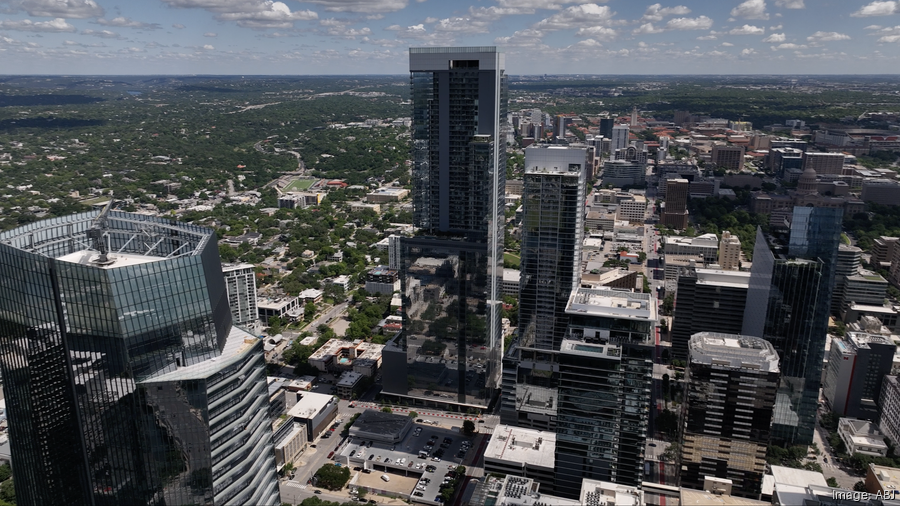
Austin Business Journal writes, "Work is expected to wrap up in 2026 on the few tower projects underway in downtown Austin, such as the sky-high Waterline tower. And with fewer construction cranes downtown these days due to market conditions, construction experts are waiting and planning for the next wave of development.
Such experts include Michael Waddell, a design director, and John Hallock, mixed-use practice leader, both of architecture firm Gensler’s Austin office. The international firm has a notable presence in Austin and recently published a report on six trends it expects to see influence real estate projects in 2026.
Hallock and Waddell sat down with the Austin Business Journal to discuss the future of mixed-use real estate projects in Central Texas.
“Across the real estate community in Austin, ambitions remain incredibly high, and it's exciting to see the type of city that the community wants to create,” Waddell said.
Upcoming trends
The next wave of development that’s likely to happen in Austin is infill development and redevelopment of sites to get more usage, said Hallock.
“Cities like Austin are going to keep filling, and all of a sudden it's not just going to be one main corridor but there's going to be little intersections within these corridors that start to have their own identity,” Hallock said.
Waddell said that Austin’s transit-oriented zoning development rules will also likely encourage more density in the city and encourage projects to prioritize pedestrian mobility. He pointed to the Plaza Saltillo area of East Austin as an example of what dense neighborhoods in Austin could look like.
Gensler designed the Centro office buildings near Plaza Saltillo, and Waddell said the firm talked with community members to design the project to play off the pedestrian-oriented redevelopment of East Austin. A key part of the project was the public plaza, and public spaces are becoming more important in mixed-use projects, he said.
“With the rise of technology and other things happening there’s this desire to get back to being around people, being in a community, being in neighborhoods that bring a lot of people together, and diverse people together,” Waddell said. “I think in terms of what really differentiates successful projects, I think it's really investing thoughtfully in the story of the place and the story of the design and the story of how the project connects to the neighborhood and the community."
Hotspots for development
Even as Austin has undergone a huge growth spurt fueled by pandemic-era population shifts, there is still room for further development, said Waddell. He pointed to the area around the Domain in North Austin as having great potential since it’s shifting away from industrial uses to ones focused on residents and office workers.
Another area likely to see a wave of development is the South Central Waterfront, which is just south of downtown Austin and has several big-ticket proposals including the long-planned redevelopment of the old Austin American-Statesman building site, the Related Cos.' plan to build a massive district and the Hunt Companies' plan to build three towers, all of which are expected to have a mix of uses.
Hallock said the South Central Waterfront could kick off a wave of development along Riverside Drive in the future.
“This whole Riverside corridor is just going to be one of the most dynamic areas to watch in the future of Austin," he said. "Because you will ultimately get the density, you're going to get transit at the same time, and you'll really be able to create what I think each one of the projects along the waterfront is going to be the next best kind of thing.”
Both Hallock and Waddell see potential for more big projects in downtown Austin, especially as the area becomes more accessible with the redevelopment of the Austin Convention Center, the cap-and-stitch projects planned along I-35 and the buildout of the Waterloo Greenway. The main challenges of any project near downtown are related to transportation and getting people in and out of downtown, though both Hallock and Waddell say projects should prioritize keeping people downtown throughout the day.
Future of office
Austin’s office market isn’t likely to get any new big projects in the next few years as the market continues to deal with high vacancies — CBRE reported in the third quarter of the year that Austin had an office vacancy rate of 26.1%. But both Hallock and Waddell expect the demand for new office projects to eventually return.
But modern demands for getting workers into the office could mean office projects won’t just have office space.
“I'd love to see more mixed-use towers (and) vertical mixed-use, where it's like 100,000 to 200,000 square feet of office. It's a hotel, it's residential, and it's all kind of blended in with retail and restaurants at the base,” Hallock said. “With the wellness trends and the amenity races, I don't think everyone can afford to build all of that into everyone's personalized office space. Nor do I think every office space should be like a hermetically sealed environment of its own amenities.”
Austin is already seeing some examples of these projects in new towers, including the Sixth and Guadalupe tower that has 32 levels of residential space and 19 levels of office space, as well as Waterline, which has a mix of residential, office, retail and hotel space.
Waddell said that any developer or planner of a new project should invest in its opening to make a good impression, because if the first phase of a project succeeds, that makes it easier to make everything else about a project work.
“Starting with a great place will catalyze everything else in your mixed-use development,” he said.
In addition, Hallock said it’s important for any development to figure out what will make it unique.
“The heart of our mixed-use projects are oftentimes these really small retail, kind of bar and restaurant moments that people crave, and so almost letting those be the catalyst for bigger projects,” Hallock said.
Waddell said that introspection for projects is important for ones being developed in the suburbs throughout Central Texas, which have seen faster growth than Austin’s urban core in recent years.
“What's unique about their history, what's unique about that part of Texas around Austin, and bringing that into the design story,” Waddell said. “I think that's really what’s going to differentiate development in all these smaller satellite communities around Austin.”"
Source: Austin Business Journal
Written by: Sean Hemmersmeier
Published: December 29, 2025
Posted by Grossman & Jones Group onEnjoy this blog post? Click here to subscribe for updates
Leave A Comment